From Ceramic to GVT: Evolution of Tile Manufacturing in India
The landscape of the Indian construction industry has undergone a radical transformation over the last few decades, and nowhere is this more visible than in the surfaces under our feet and on our walls. Tile Manufacturing in India has evolved from a small-scale, traditional craft into a high-tech, multi-billion dollar global powerhouse. This journey from basic ceramic squares to the sophisticated Glazed Vitrified Tiles (GVT) of today is a testament to India's industrial prowess and its ability to adapt to global design trends.
The Humble Beginnings: The Ceramic Era
In the early years of the industry, ceramic tiles were the undisputed standard. These tiles, primarily made from red or white clay, were fired at relatively lower temperatures compared to modern standards. While they were revolutionary at the time—offering a more hygienic and durable alternative to traditional flooring—they had limitations.
Traditional ceramics were more porous, meaning they could absorb water over time, which limited their use in heavy-duty outdoor areas. The designs were also quite simple, often restricted to solid colors or basic screen-printed patterns. However, they laid the foundation for the massive infrastructure that would eventually make India the second-largest producer and consumer of tiles in the world.
The Vitrification Leap: Strength and Durability
The first major evolutionary leap occurred with the introduction of vitrified tiles. By mixing silica, quartz, and feldspar and firing them at extremely high temperatures, manufacturers created a tile that was essentially a single, dense mass with glass-like properties.
This process, known as vitrification, resulted in tiles with near-zero water absorption and immense structural strength. These tiles became the preferred choice for high-traffic commercial areas and residential flooring. However, the industry didn't stop at durability; the focus soon shifted toward aesthetics, leading to the "Digital Revolution" in tile printing.
The Modern Masterpiece: Glazed Vitrified Tiles (GVT)
The pinnacle of current Tile Manufacturing in India is undoubtedly the Glazed Vitrified Tile (GVT). GVT represents the perfect marriage of the strength of a vitrified body with the artistic versatility of a glazed surface.
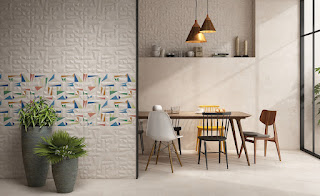
With the advent of high-definition digital inkjet printing, manufacturers can now replicate any natural material with startling accuracy. Whether it is the intricate veins of Italian marble, the rustic grain of reclaimed oak, or the industrial grit of concrete, GVT makes it possible. This technology has revolutionized the Wall Collection of major brands, allowing for textured finishes and 3D effects that were previously impossible. Today, a modern Wall Collection includes everything from "book-matched" marble designs to fabric-textured tiles that add warmth and depth to interior spaces.
Morbi: The Heartbeat of Innovation
No discussion about this evolution is complete without mentioning Morbi, Gujarat. As the ceramic hub of the nation, it houses hundreds of units that have consistently pushed the boundaries of technology. The best tiles company in Morbi is no longer just a local player; these companies are global exporters, competing with Italian and Spanish giants.
The ecosystem in Morbi has allowed for rapid scaling. By investing in European machinery and sustainable practices, the best tiles company in Morbi can now produce massive "Slabs"—tiles as large as 1200x2400mm—that create a seamless, luxurious look with minimal grout lines. This shift toward large-format slabs is the latest chapter in an evolution that shows no signs of slowing down.
Looking Ahead: Sustainability and Beyond
As we move further into the decade, the evolution continues with a focus on "Green Manufacturing." Modern plants are increasingly using recycled materials, natural gas, and water-recycling systems to reduce their carbon footprint. The journey from simple clay tiles to high-definition GVT slabs reflects India's ambition to lead the world in both style and substance.
Comments
Post a Comment